Why the Sony 40mm f2.5G is My Most Used Travel Lens
Heads up: some links on this page are affiliate links, meaning I may earn a small commission if you make a purchase — at no extra cost to you. This helps keep the content free and the adventures going. I only ever recommend things I’d use myself.
This week, I have learnt a tough lesson. In Kuala Lumpur, I traded in my big expensive zoom lens (at a considerable loss) because I wasn’t using it. Mostly because of a tiny lens that cost a third of the zoom. That means that the Sony 40mm F2.5G lens is my most used lens for travel photography. In this blog I’ll discuss just why.
My Initial Travel Photography Set Up
When I left the UK in January for a year of travel around Asia, I knew I wanted a zoom lens that would do everything when I wanted it to and a small prime that would be my everyday carry when I didn’t take out the zoom. Add my iPad for editing on the go and I thought I had the perfect travel combo:
My mistake was that I picked the behemoth Tamron as my “do everything” zoom. Street, portrait, wildlife, daytime, night time, events, paid work. You name it, the Tamron could do it. It’s a fantastic lens.
It’s also massive and weighs just shy of 1.2kg. Marry that with my diminutive Sony A7C II and you have a weird front-heavy combo.
Before flying out, I convinced myself I could deal with it. Four months into the travelling, it’s gone because I don’t use it. It’s just too cumbersome to carry around whilst backpacking.
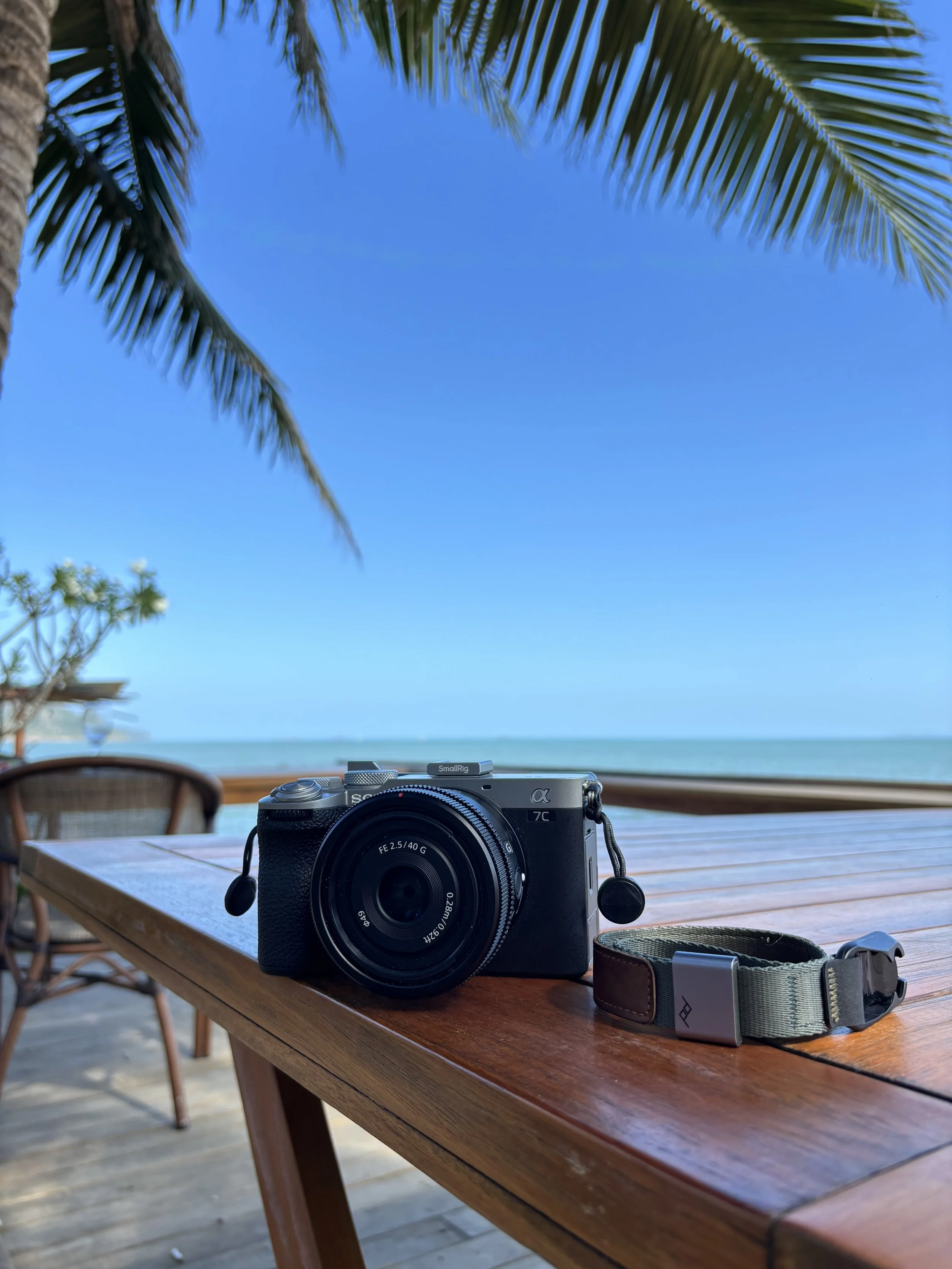
Instead, I’ve used the lovely little Sony 40mm F2.5G lens 99% of the time. Why? Because it’s tiny.
Why the Sony 40mm F2.5G is good for travel
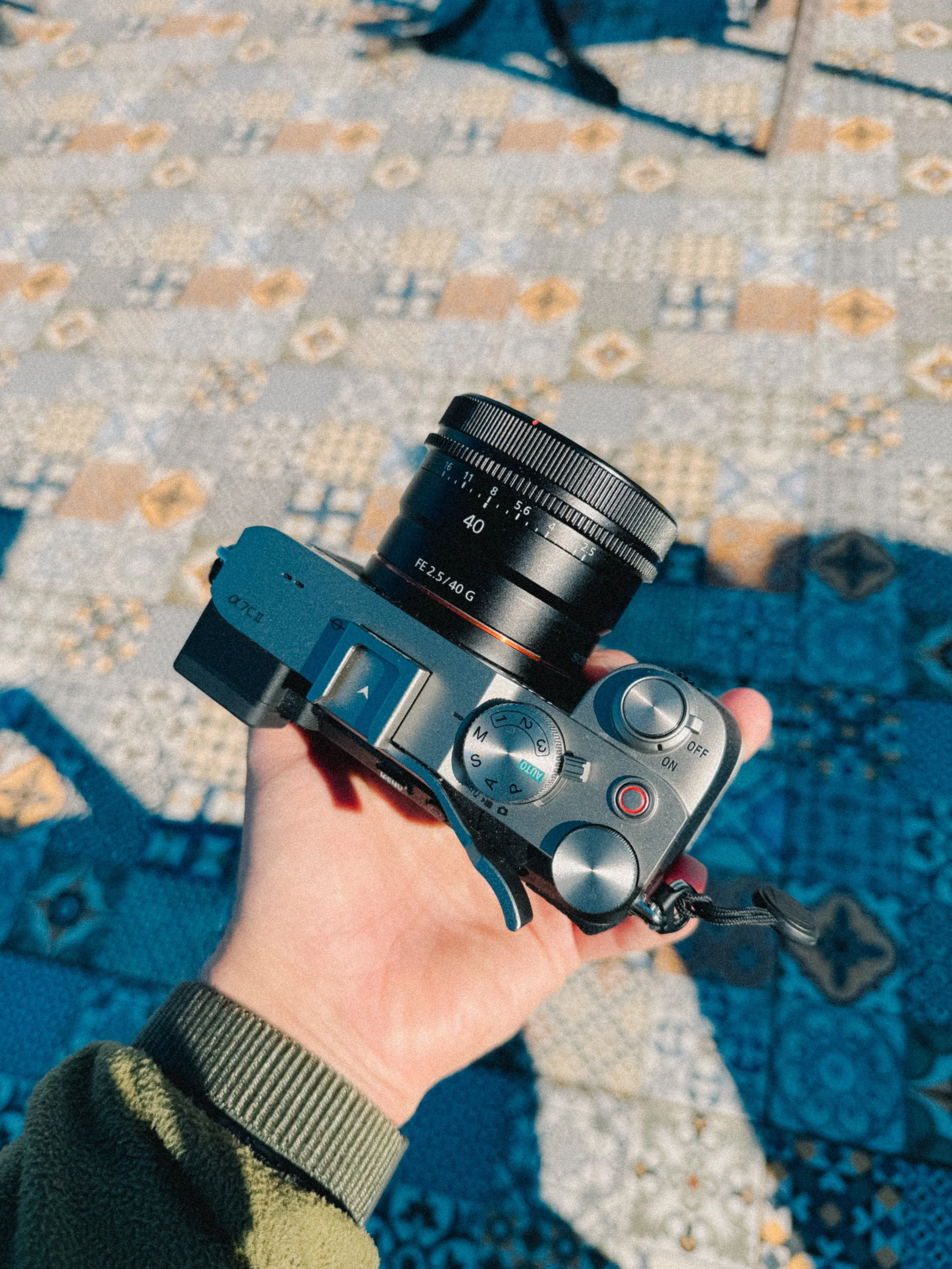
This is my real world usage account, so I will spare you the technical jargon of the lens. If you’d like sharpness charts, please look elsewhere (it’s definitely sharp enough). I will, however, talk about two of the specs that are of interest: size and weight.
It measures 68mm (D) x 45mm (L) and weighs just 173g. That weight is less than an iPhone 17, which no one would think twice about carrying around all day.
It is a seventh of the weight of the Tamron zoom lens I mentioned earlier. A SEVENTH.
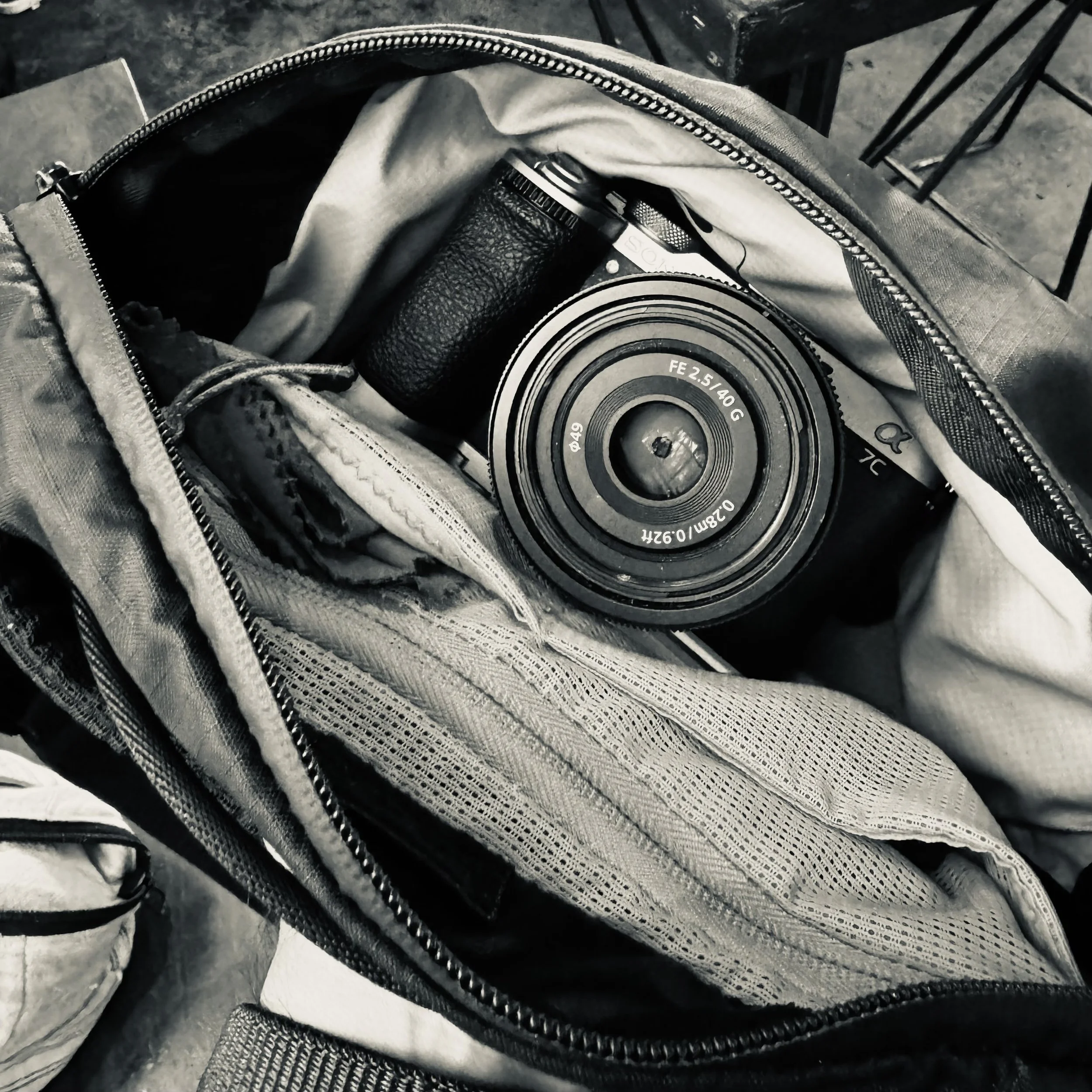
It fits nicely into my 4L Peak Design Outdoor Sling while being attached to the A7CII.
It’s also weather sealed.
I can take it anywhere and everywhere, on my wrist, around my neck or have it out at a moment’s notice from my sling and take great pictures.
Not to mention it’s sharp enough and focuses as fast as any lens I’ve tried.
What about that focal length though?
Is the 40mm focal length good for travel?
The elephant in the room. If you have a look at my home page, you’ll see a collection of my favourite images from my travels. At the time of writing, only three of them were taken outside of the 35-40mm range. These are my favourite focal lengths, and those of many travel photographers for very good reason. It’s often said that this focal length is the most similar to that of the human eye, with minimal distortion and a life-like field of view. It allows you to isolate subjects when you need to, but also photograph scenes and tell stories.
Are there scenarios that I’d want wider or longer or that I’ve missed shots? Yes, of course. But the “compromise” is that I have my camera with me literally all the time, and this alone has got me more shots than being able to shoot at 150mm for the 1% of days I’d take out the bigger zoom lens.
“Why not take a smaller zoom?” I hear you ask.
Small prime lens vs zoom lens for travel photography
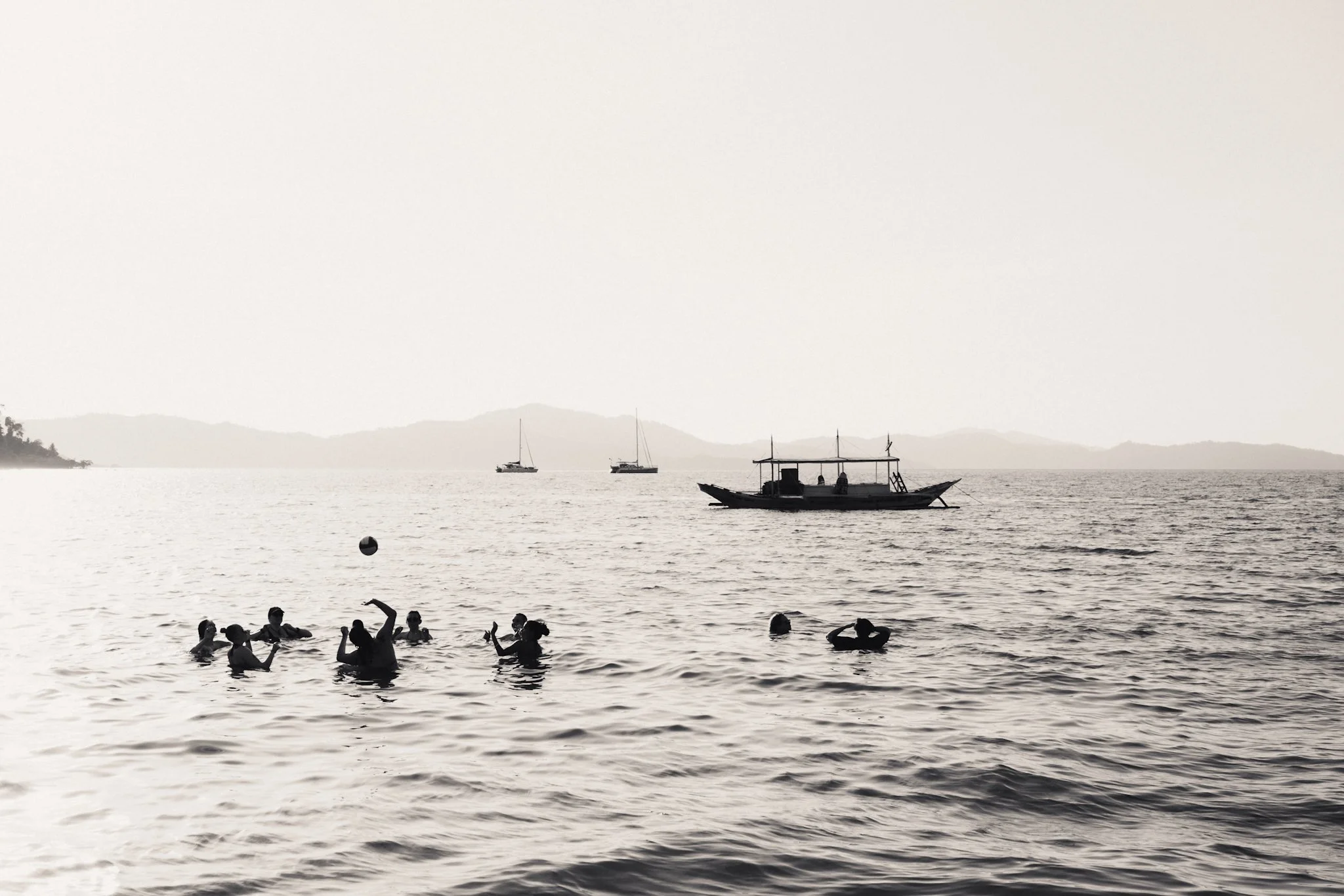
I have already mentioned above that the main benefit of the small set up was that I always have my camera with me. The photo above, for example, was taken in a small beach town called Port Barton on the island of Palawan, the Philippines. I was violently ill in Port Barton, and the days that followed, I could not do anything but sit on a bean bag at the beach. But I had my camera with me in a small sling, and I was able to quickly take this image of people playing in the sea as the sun was lowering towards the horizon. I’d have not taken my camera out if it were cumbersome. Unless the laws of physics have been altered, there will never be any full frame zoom lenses that are as small as this.
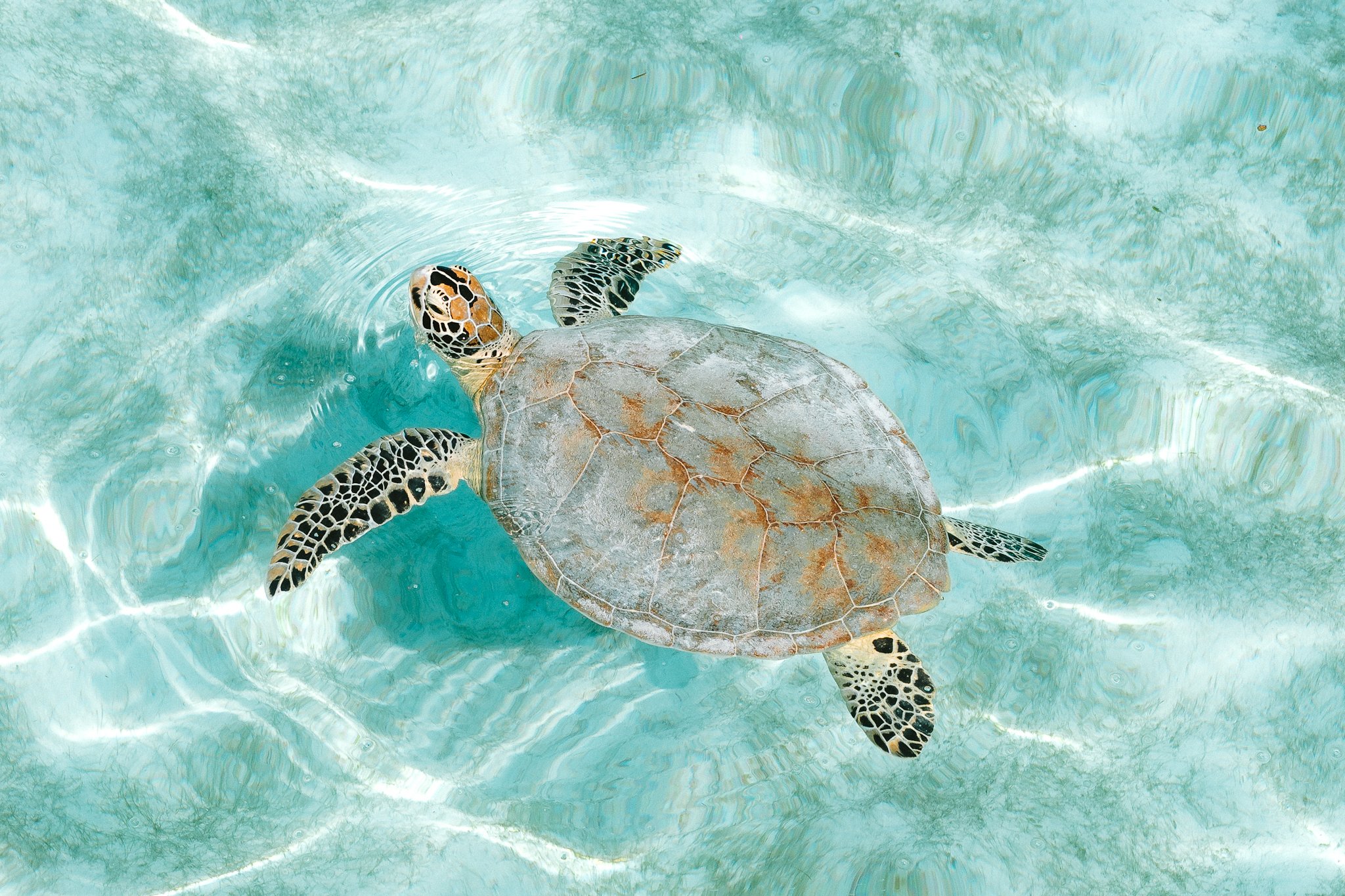
The other significant benefit that I have found is the creative challenge of shooting at one focal length - and the clarity that comes with it. There is no zooming in and out. You have 40mm or nothing, so you make it work. There is no decision paralysis. It has been discussed many times before, but shooting at a single focal length for a period of time is fantastic for your photography progression. Your style becomes more consistent, your eyes adjust to what the image would look like, you know how the world looks at 40mm. And even if you’re in a pinch, like seeing a turtle in crystal clear surface water, you can crop. 40mm becomes 60mm and modern sensors are fantastic.
Bonus benefits
There are two more amazing travel photography benefits that come with this lens.
One is its build and construction. With just a 49mm front filter thread, the front element is minuscule. There isn’t that much glass at all. Twinned with its robust metal housing, that makes the 40mm F2.5G a little tank. It’s incredibly reassuring knowing you can knock, bang and clip the lens whilst it’s in a light sling like mine, or even when attached to the camera on a shoulder. Unless you drop it from a height, it’ll be absolutely fine, making it ideal for travel and street photography where you aren’t sure what you’ll face.
The second, also relating to its size, is that you are relatively inconspicuous when you’re using it. It doesn’t scream pro lens and you are definitely noticed less. This is definitely a benefit when you’re travelling in less safe destinations, but also in general street photography when you can “bruise the scene” by being more obvious. Having used the A7CII with the 40mm, the huge Tamron and the much larger 35mm GM prime, there’s a big difference in public perception of you with each of them.
So, should you travel with only the Sony 40mm F2.5G lens?
I think if you’re a Sony full frame shooter, you should have this lens. I usually don’t like to blanket recommend gear, but this is an exception. It’s wonderful, and has completely changed the way I travel with a camera.
If you’re a beginner travel photographer, having this lens means you can always have your camera with you. This alone, as I mentioned above, is the sole reason my travel photography has improved so much. Practicing more at anything will make you better. Taking more photographs makes you a better photographer. A common saying is “the best camera is the one you have with you”. With this lens, there is no excuse to leave it in the hotel room because it’s too heavy to carry.
The Sony 40mm F2.5G made me get closer to my subjects, think more carefully about composition, and stopped me mindlessly adjusting focal lengths hoping for a better shot. Pair that creative constraint with the fact that it weighs less than an iPhone, and there’s no excuse not to have it with you — through markets, temples, beaches, and even a bout of illness on a Philippine island, I get the shot. So should you.
Don’t forget to sign up for email updates using the form below - it’s the easiest way to keep up to date with new blog posts, gear changes, travel updates and new products.