My Minimal Travel Photography Kit (Sony A7CII) — Everything I Actually Use
Heads up: some links on this page are affiliate links, meaning I may earn a small commission if you make a purchase — at no extra cost to you. This helps keep the content free and the adventures going. I only ever recommend things I’d use myself. There is a full list of links to gear at the bottom of the page.
This is all the gear I carry as a full time travel photographer — camera, lenses, bags, and accessories — with the reasoning behind each choice. Travelling full time really makes you think hard about the gear that you carry. The journey to a perfect travel photography kit is never a smooth one, and I’m not sure anyone would say they’ve arrived at that particular destination.
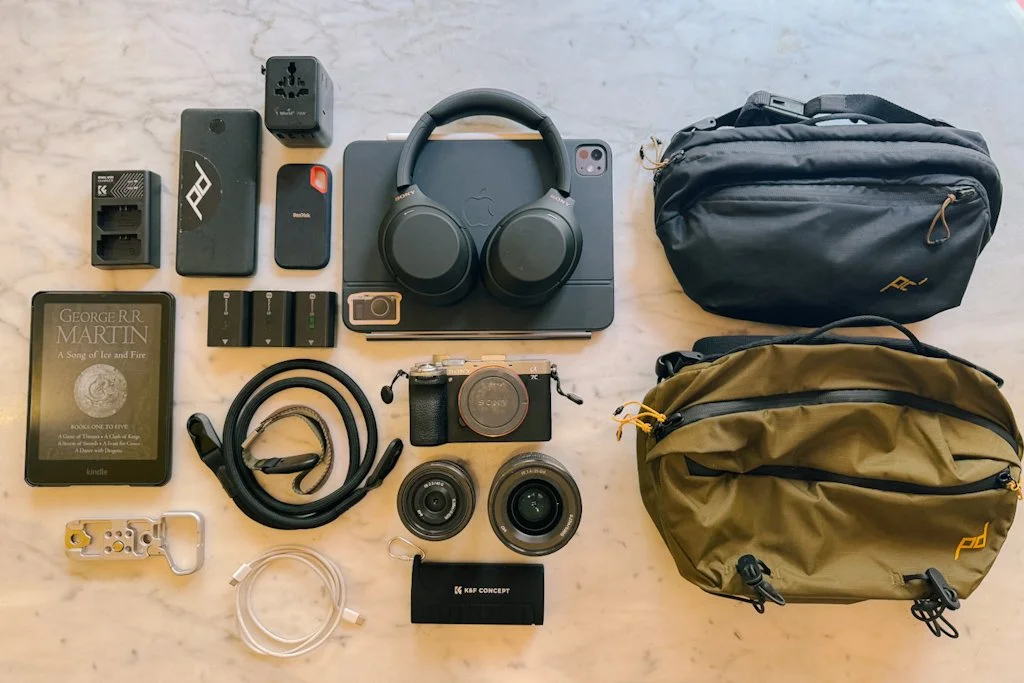
Camera - Sony A7CII
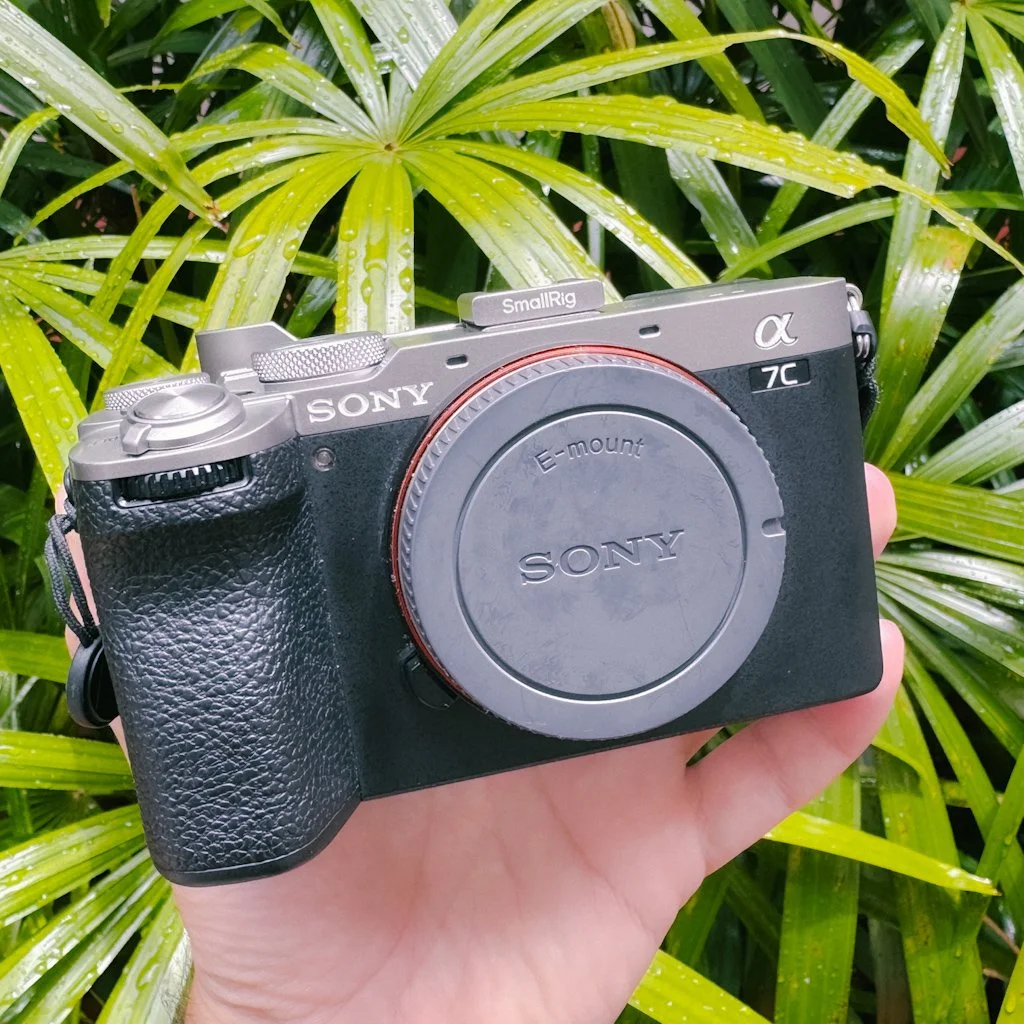
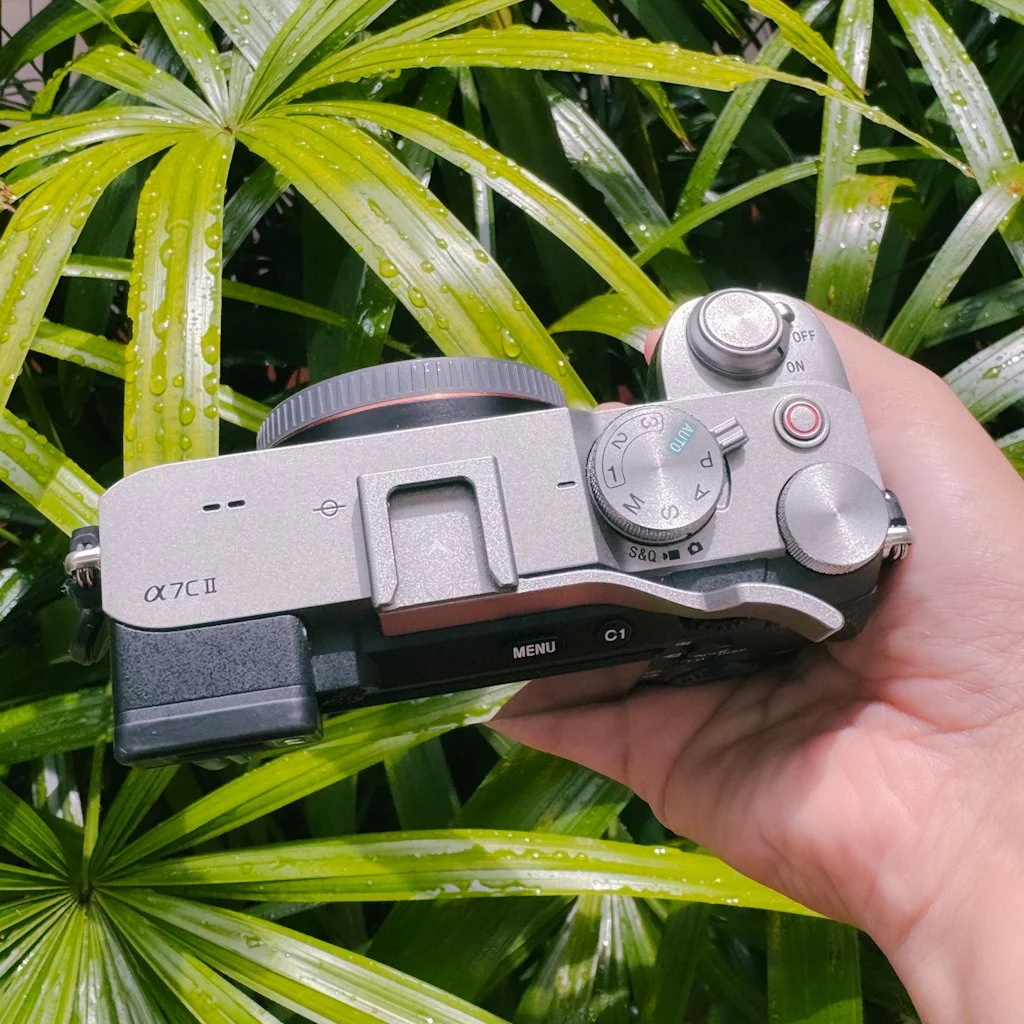
My chosen camera is arguably the most compact full frame modern camera out there. When you have to carry everything and move it often, size and weight are really important.
Full frame mirrorless cameras in general are the delicate younger generation of the bigger and bulkier DSLR bodies of the 2000s and 2010s. In recent years, the A7C range has pushed this even further. Somehow, the engineers at Sony have crammed a magnificent 33MP full frame sensor, in-body stabilisation, and all sorts of modern technology into a tiny body, the size of which rivals that of APS-C cameras. Body only, it weighs just 514g and fits neatly into both of my slings (of which I will discuss later) to be carried all day or during travel.
There are other options too - the older A7C is still a fantastic camera, with the newer A7CR boasting a monstrous 60MP resolution sensor.
A7CII vs A7CR
I chose the A7CII because it has the most modern AF system, it’s fantastic for video when I want it, but also because 33MP is more than enough. When you’re travelling and taking thousands of photos, having file sizes nearly half as small is a significant advantage. I am also not printing billboard sized images, so I do not need the mega high resolution that the Sony R range is famous for.
I have my A7CII customised so it completely gets out of my way when I’m shooting too. I’ll likely write about how mine is set up in a future blog post.
I love mine, and I’d recommend it to anyone.
Lenses - Sony 35mm F1.4 GM & Sony 40mm F2.5 G
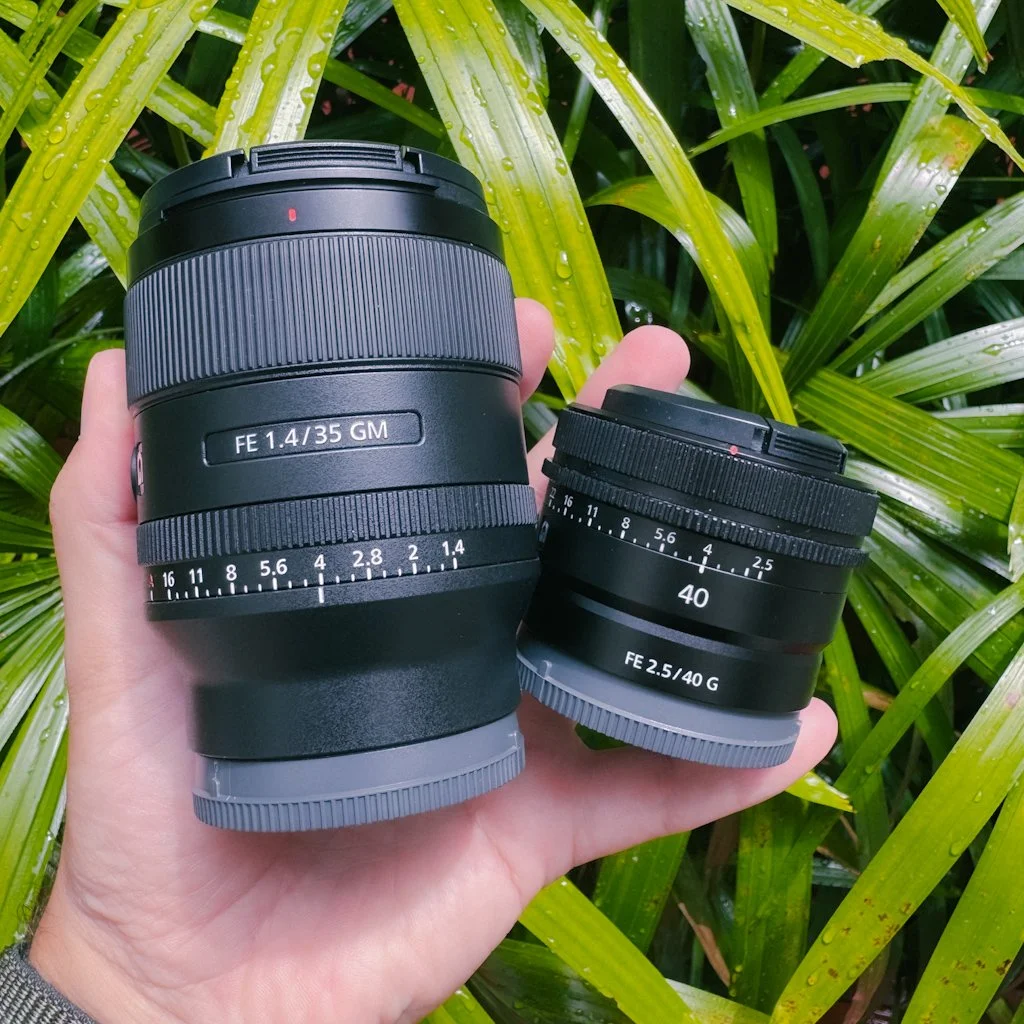
I know what you’re thinking - why have only two primes where both are very similar focal lengths? There is method in my madness. Let me explain.
Firstly…. a note on Primes vs Zooms
I have tried both standard primes and zooms multiple times, in every shape and size. There is something special about using primes that you just don’t get with zooms. Everything is more intentional. There is more method to the shot. You have to see the world in that focal length. Not to mention it helps build a coherent style.
Most people recommend a versatile zoom for travel photography, but I am the opposite. Partly because of the creative constraint, but size is also important(?!). Smaller is better… I recently sold my big heavy zoom lens in Kuala Lumpur because I just wasn’t using it (read here for that story).
Main lens - Sony 35mm F1.4 GM
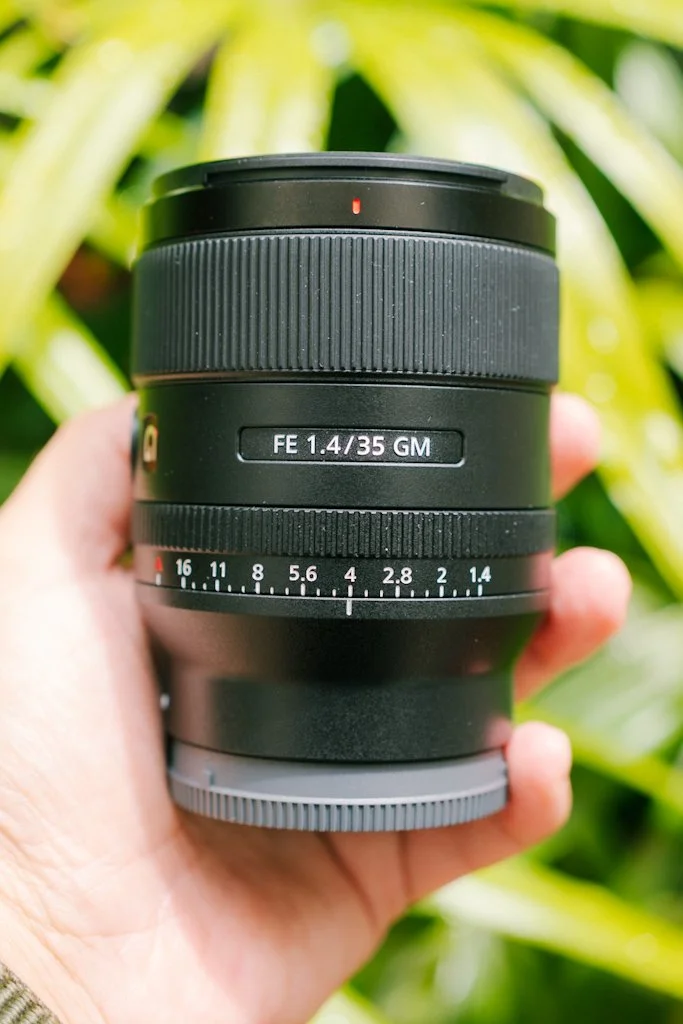
You’ll not have to dig very far into the Sony lens world to hear glowing reviews of this 35mm G Master lens. I do not need to bore you with sharpness charts or discuss bokeh balls - lens fanboys have done this since its release. For me, it’s real world use that matters.
I have long loved the 35mm focal length for travel. It’s akin to the natural field of view from the human eye, and crucially allows you to capture both details and scenes.
I love 35mm so much so that having tried many different combinations of bodies and lenses, I have now gone full circle since my first Asia trip in 2017, where I had only the Nikon D750 and the Sigma Art 35mm F1.4 lens. That combo weighed as much as a baby elephant, and I needed a big backpack to move it around. As with bodies, mirrorless lenses are much lighter and smaller than their older DSLR equivalents. Together with the A7CII, I have a professional package that weighs only 1kg and can shoot pretty much everything. It also fits into both of my slings, either attached to the A7CII or loose with both caps.
35mm is well used for street, travel, environmental portraits, commercial work, weddings and just about everything else. I care more about the F1.4 for shooting at night and in dark interiors than throwing out backgrounds. A decent photographer can shoot pretty much anything with one of these lenses, so it’s in my bag.
Travel day/casual lens - Sony 40mm F2.5 G
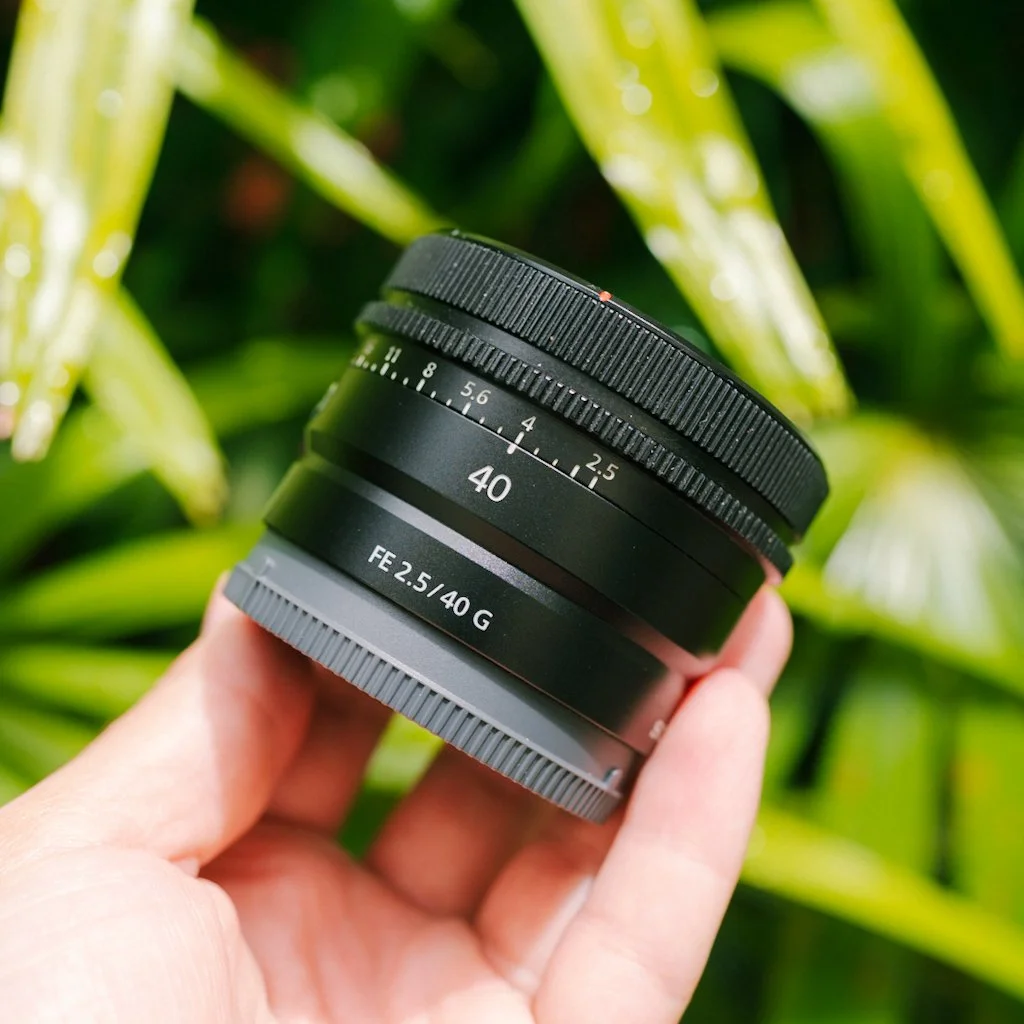
So where does this little lens fit in? I have it mostly because it’s tiny. I have written more about this in another blog post here. Again, I won’t be going into technical specs here - there are plenty of other places you can read about that.
I have used this lens so much because it has been glued to my A7CII. It makes the perfect compact combo. It’s fast to focus, very sharp, has an aperture ring and has a custom button that I use an awful lot. Again, attached to the camera, it will fit comfortably in both of my slings and it’s built like a little tank. It doesn’t draw any attention either. Some of my favourite images ever have been taken with this combo, and my photography has improved considerably because I’ve just taken more photos.
As I’ve discussed above, 35mm is my favourite focal length. Sadly, Sony only produce the little compact G lenses in 24mm, 40mm and 50mm. The closest of those to 35mm is of course the 40mm, but they are not the same. 35mm is approximately 14% wider than 40mm.
This focal length is still excellent for travel photography, but you do have to focus on details more than capturing wider scenes, particularly in cities. Still, you only have to look at my best images (here) to see what kind of things 40mm can get you.
As I mention in my other blog post, I generally don’t make sweeping recommendations for gear. This is the exception. If you are in the Sony system, buy this lens (or the 24/50mm equivalent if more suitable).
Editing on the road - iPad Pro M4 11 inch
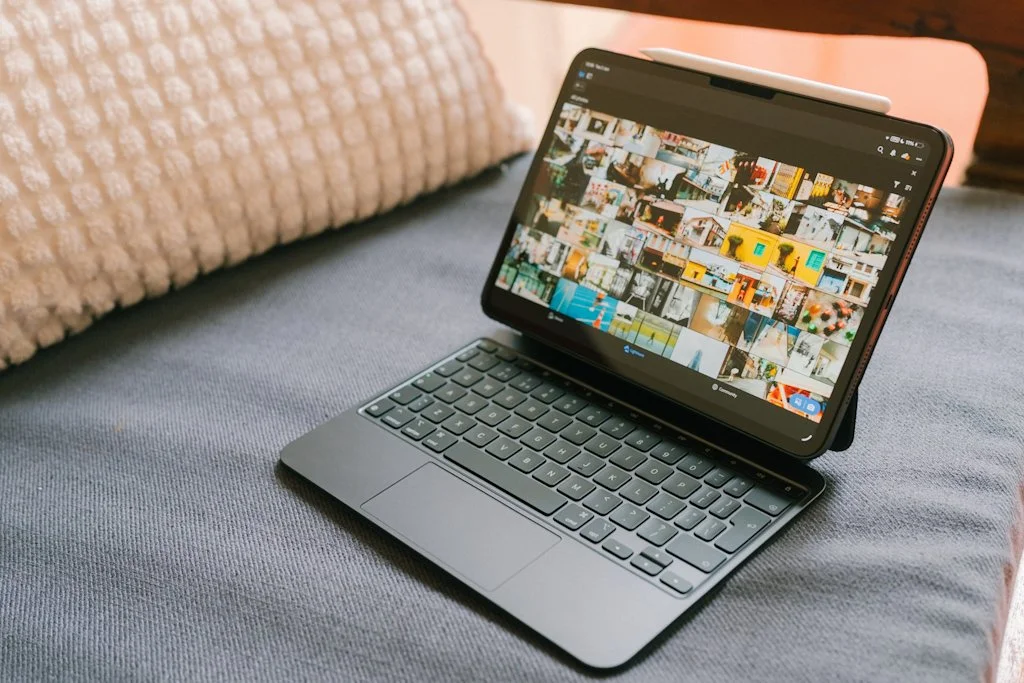
The iPad Pro is an excellent machine, capable of everything I need whilst travelling. The M4 processor is plenty enough for the work I do and the display is beautiful. The workflow to transfer files, edit via the Lightroom iPad app, back up to the cloud and export photos can be a little clunky and demanding on battery power, but the process of using a pen to edit is much more intuitive than that of a trackpad or a mouse. It also doubles up as something to watch YouTube or films on when relaxing in a hotel room or killing hours on a flight.
The 11 inch is plenty big enough - the 13 is just too big for every day carry.
It’s paired with the Apple Magic Keyboard, which is a crucial addition for writing things like this, as well as doubling up as a protective case.
Camera Accessories
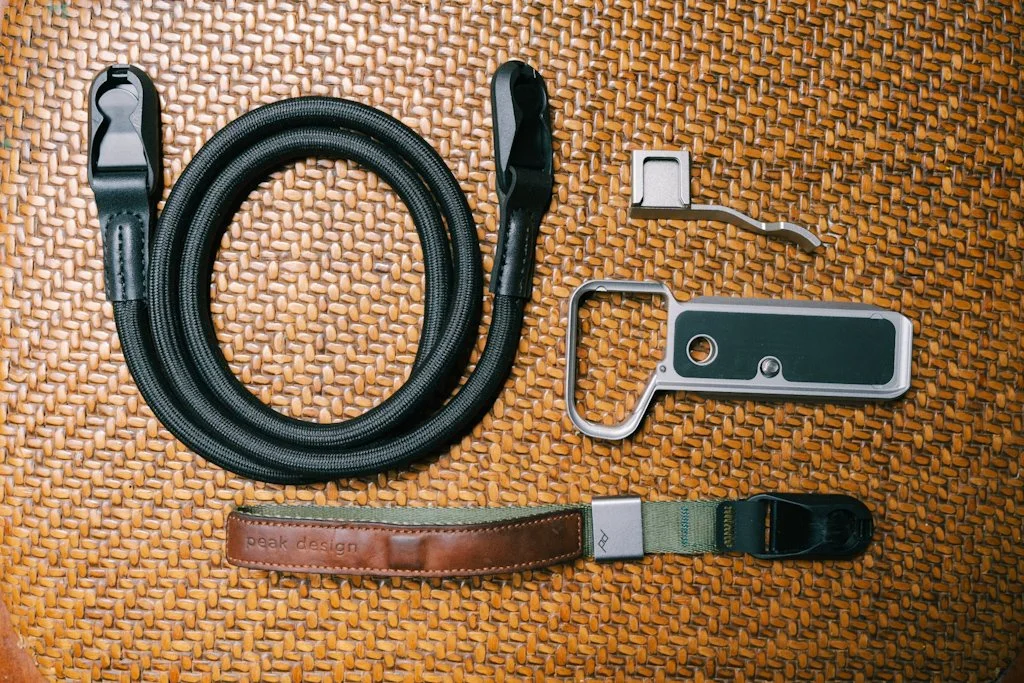
Straps and ergonomics
I mostly use the Peak Design Cuff wrist strap as I like having my camera ready in hand. It’s well built (as all PD gear is) and has a lifetime warranty but most importantly, it stops you from dropping your camera or someone grabbing it from you.
I also have a cheap unbranded version of the Peak Design Form Rope as a neck/shoulder strap that I sometimes use if I want both of my hands free (think hiking, food markets, on motorbikes etc). I found the PD Slide a little too bulky given the minimal style, and I would have purchased the real PD version of the Form Rope had I been able to find it on my travels in Asia. Time will tell if I rue that choice.
The Sony A7CII is tiny, and that is its main benefit. The downside is that it can be a little too small in some hands. I find I prefer to attach the SmallRig A7C Base Plate Grip if using the bigger lens for longer periods of time. I also enjoy using this SmallRig cold shoe-mounted thumb grip. Both of these are aluminium and really lightweight, so I don’t have an issue carrying them. When going ultra light, I will remove them entirely.
Storage and Data Transfer
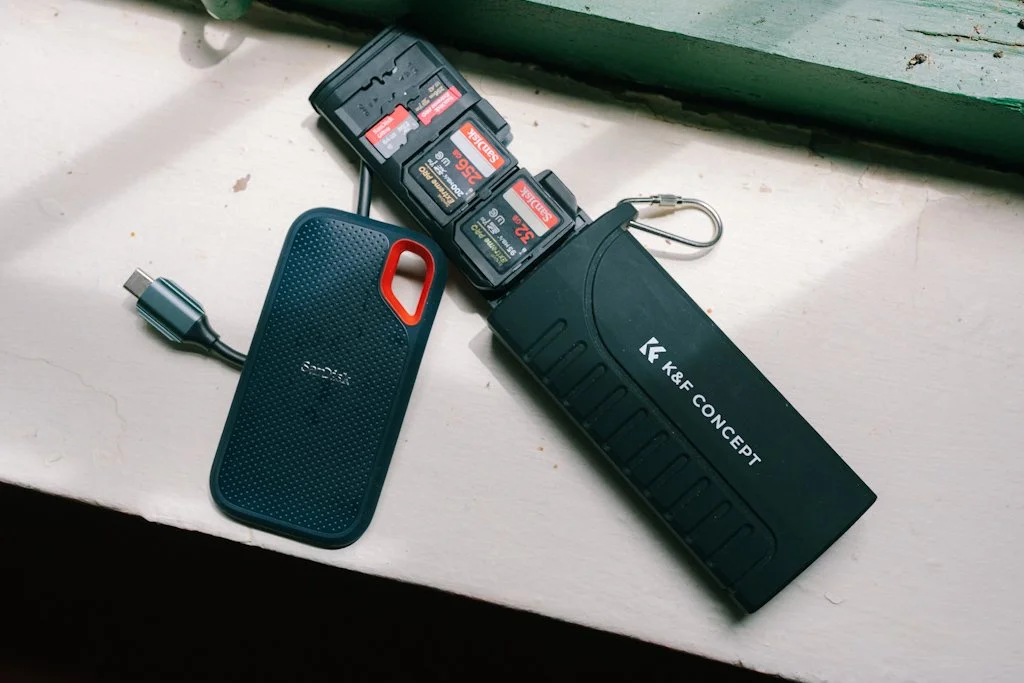
As I have an iPad and not a MacBook Pro, I need a memory card reader to transfer files. I use this K&F Concept Card reader that neatly doubles up as a memory card holder for both SD and Micro SD.
I also make use of a 1TB SanDisk Hard Drive for backing up my best work.
For regular SD cards, I use SanDisk Extreme Pro cards in varying sizes. These are enough for me as I don’t burst shoot 300+ RAW files doing wildlife and sports.
Power
With any digital tech, you need to power to make them work. Sadly, that means you need all manner of random bits.
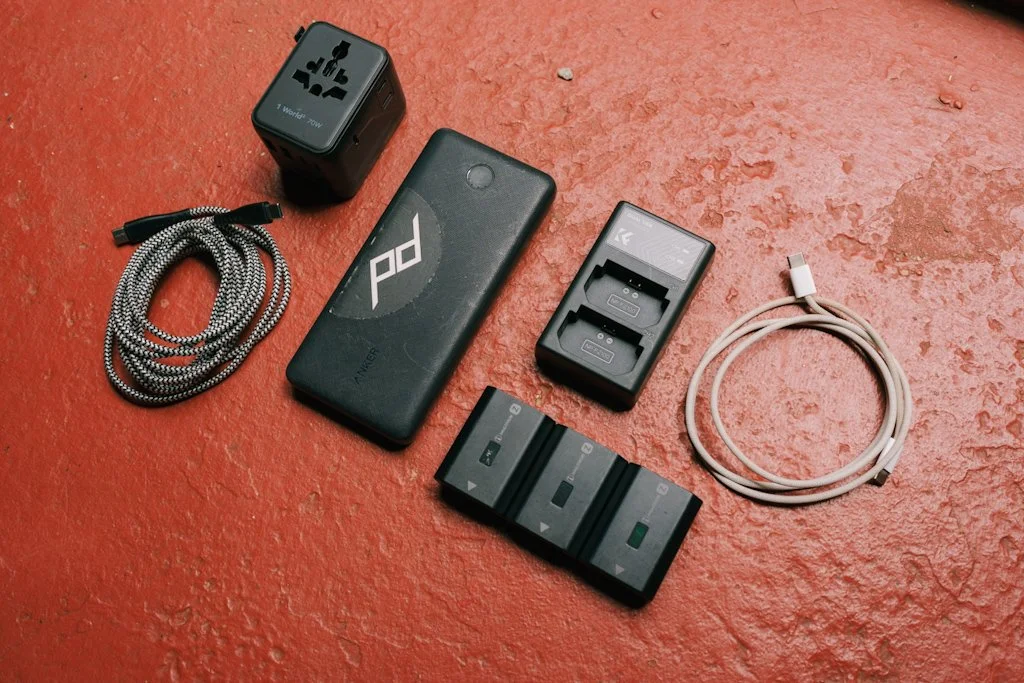
I carry 4x genuine Sony batteries and a lightweight dual USB battery charger.
I have tried third party batteries in the past, and while many people say they are the same, I have always had issues with them living a short life compared to the real deal.
Four is probably too many, but it means I can be out all day shooting, forget to charge my batteries overnight and then still shoot for the whole of the next day too.
The charger being third party does not matter at all, and it can be charged via USB rather than a dedicated plug like the Sony ones.
I also have a 20,000AmH Anker power bank (link is a newer version) for my phone. It will also charge my camera via USB if I’m in a real pinch.
My partner and I share this single travel adapter and it can charge 5 things at once and still plug in the bedside lamp if we really need it to. It’s big enough to charge my partner’s MacBook Pro and the iPad quickly and can be used anywhere in the world.
I have a few USB-C charging cables, varying in size, but they are of no specific brand and come with no specific recommendation.
Camera Cleaning
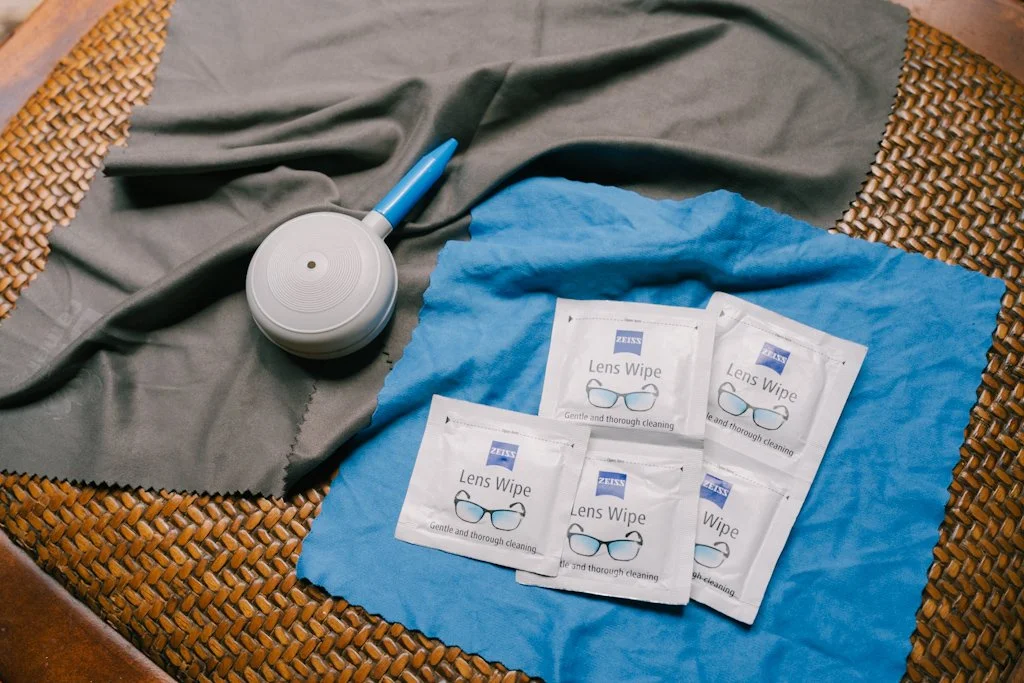
Dull but necessary. I carry a large lens cloth or a small lens cloth at all times. I also have a number of lens wipes dotted around all bags and suitcases that get used periodically for tougher jobs.
I have a very simple little dust blower that stays in the hotel room too.
Camera Bags - Peak Design Outdoor Slings (7L + 4L)
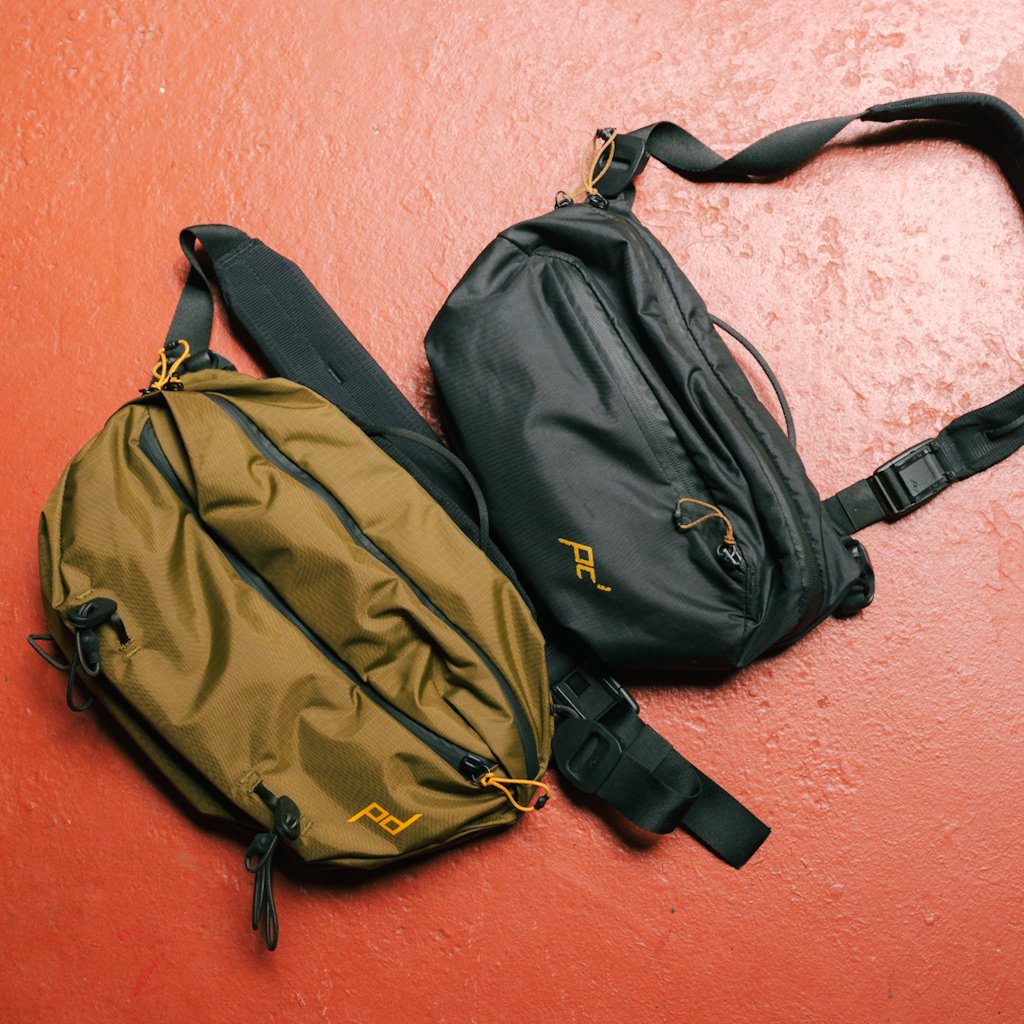
The Peak Design Outdoor slings are super lightweight and durable bags. They’re designed for a rough life outdoors rather than as camera gear bags, but I’ve made a couple of tweaks that make them perfect for my use.
As with the lenses, there is some overlap here. Why have two slings that are basically the same rather than one backpack that can do both?
The answer is simple - smaller is better. But also because backpacks make your back hotter than the sun and they’re really heavy. I have sent home my Shimoda Urban Explore 20L backpack because it never left the hotel room. It was just too hot and heavy.
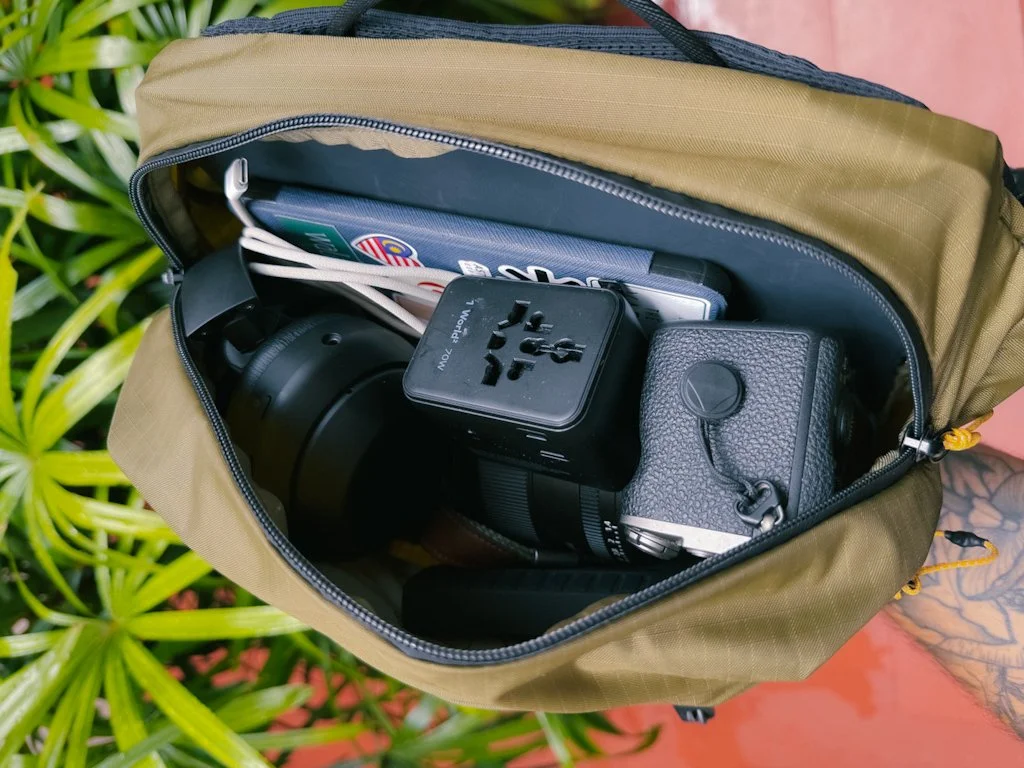
Every single day, the Peak Design Outdoor 4L Sling is with me. It has my every day carry stuff (cash, sunglasses, passport, pen, notepad, power bank and cable) but it can also fit the A7CII with either the 35mm or the 40mm lens attached. I usually have my camera out, but it will fit in there if I need it to (i.e. a sudden tropical downpour, an undesirable area, or I REALLY need both my hands and full attention on something else). I have two small camera bag Velcro dividers sat in the bottom to add some padding if my camera is in there. These are easily removable if I don’t need them.
I’ve worn the sling pretty much every single day for the last 4+ months, and it’s held up well. Only the PD logo is starting to show any signs of wear.
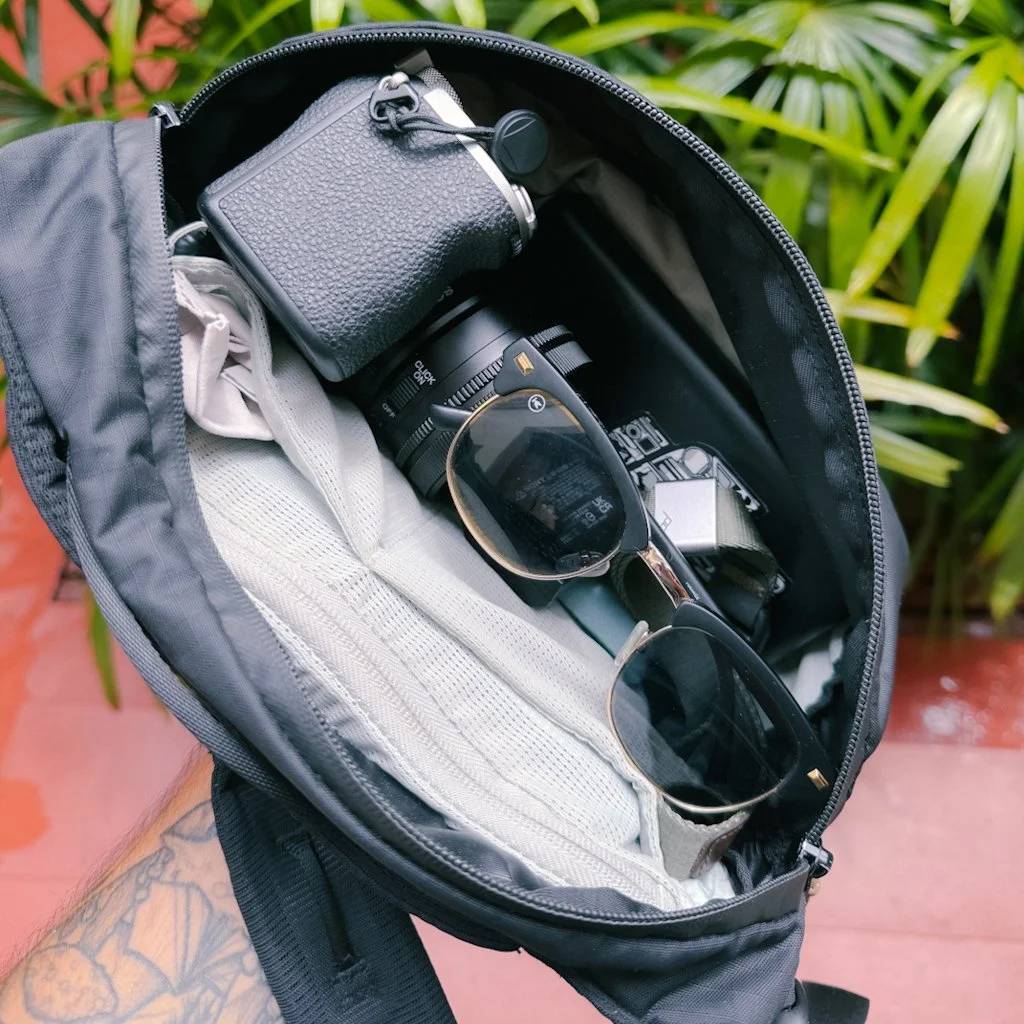
On travel days, most of the stuff in this blog is in the Peak Design Outdoor 7L Sling. Only the things I need quick access to (A7CII paired with the 40mm, plus my headphones, cash, sunglasses, passport, pen and notepad) go in my 4L sling. The 7L goes on my back, the 4L goes on my front.
The 7L sling also doubles up as my “work bag” if I want to go sit in a coffee shop for a few hours. It’ll take the iPad, headphones, camera (with either lens) and anything else I need.
This combo means I can have lightweight flexibility to carry all of my gear in any situation. I will write a full review of these bags in a separate blog post.
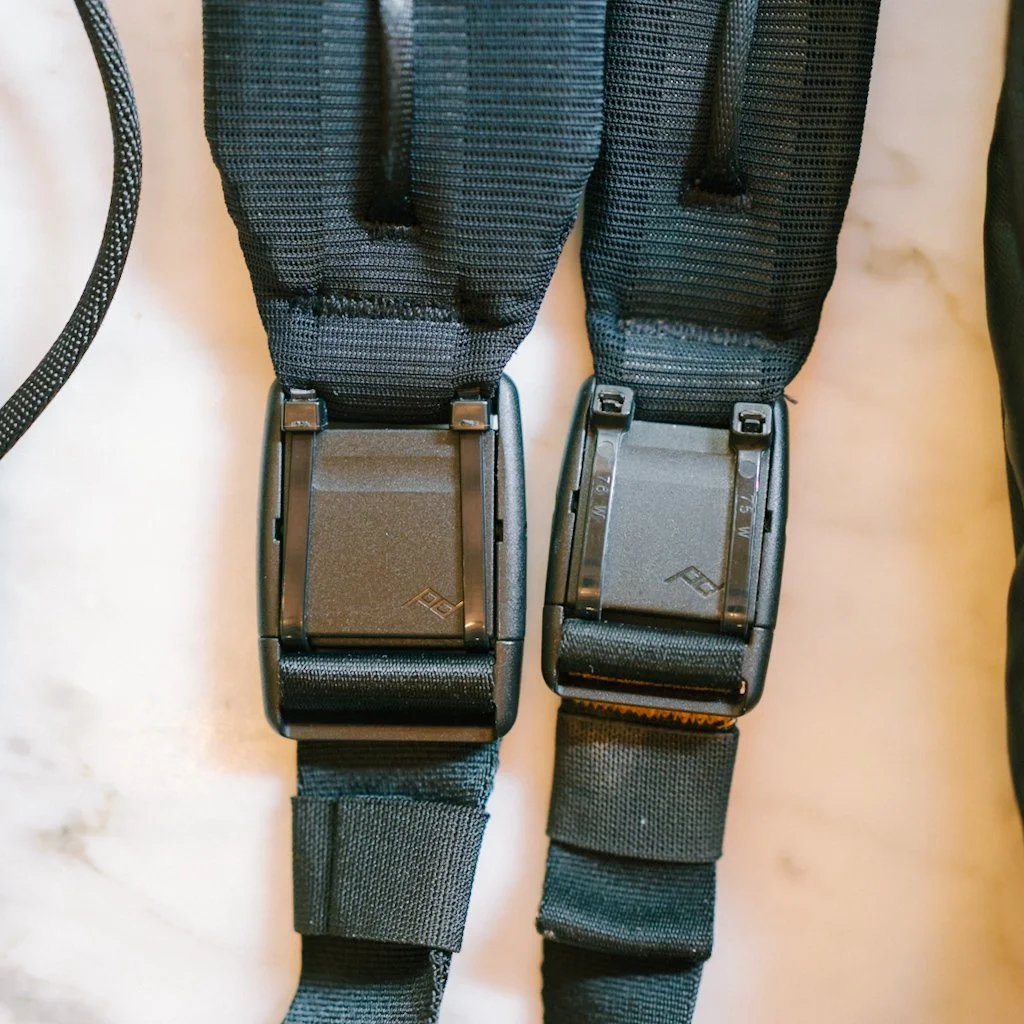
A small note on the Peak Design Outdoor Sling design flaw. There are multiple reports of the buckle inadvertently coming undone and the bag dropping to the floor with camera gear inside. I was never going to risk this, so I have added two small cable ties to each buckle to prevent it from ever happening. You could argue that you should never have to do this to a bag that costs as much as it does, but the benefits of this bag far outweigh the negative that is an easy fix.
Miscellaneous Travel Essentials
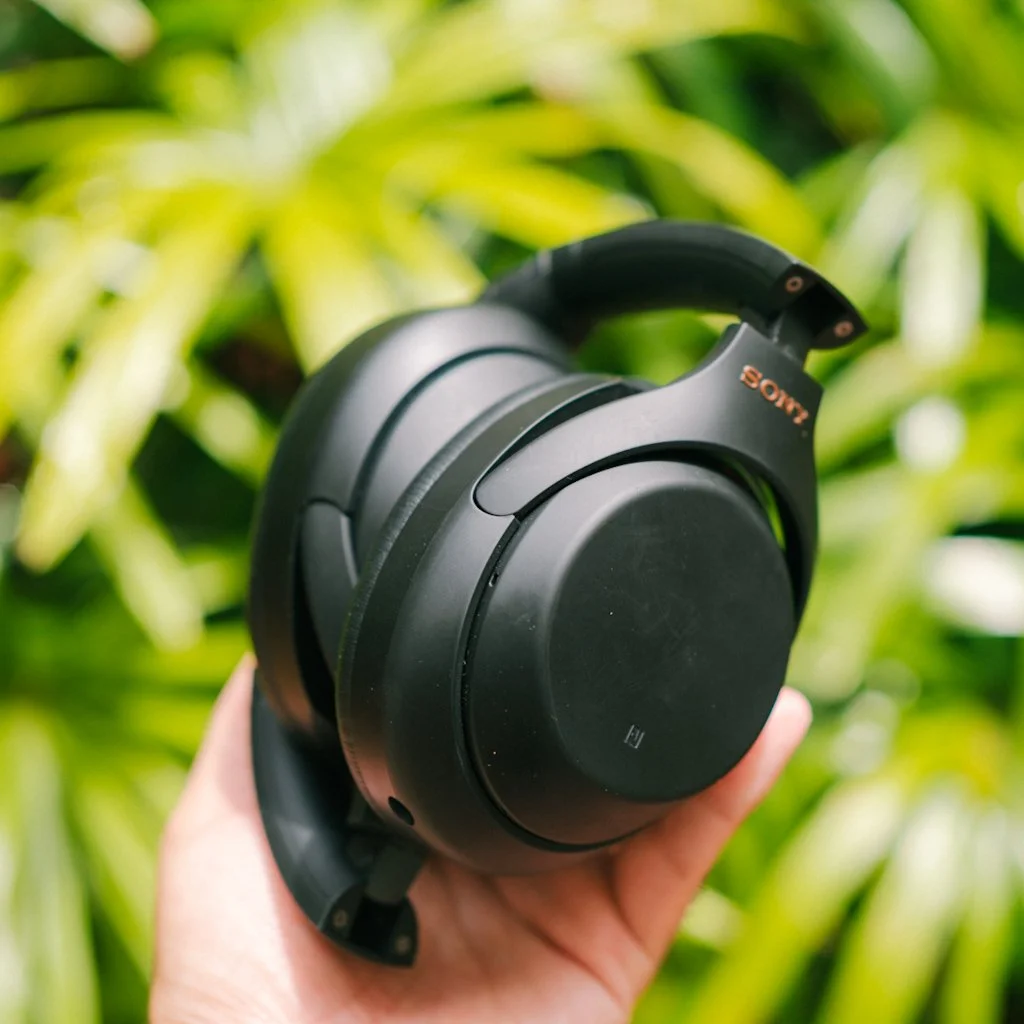
The Sony WH-1000XM4 headphones are my go to. The noise cancelling is a godsend on planes, trains and buses, and the audio quality is fantastic. Ideally, I’d have small in-ear headphones, but I just can’t seem to find a pair I get on with. This Sony pair are a little large, but they fold to a reasonable size and fit into my bigger sling comfortably.
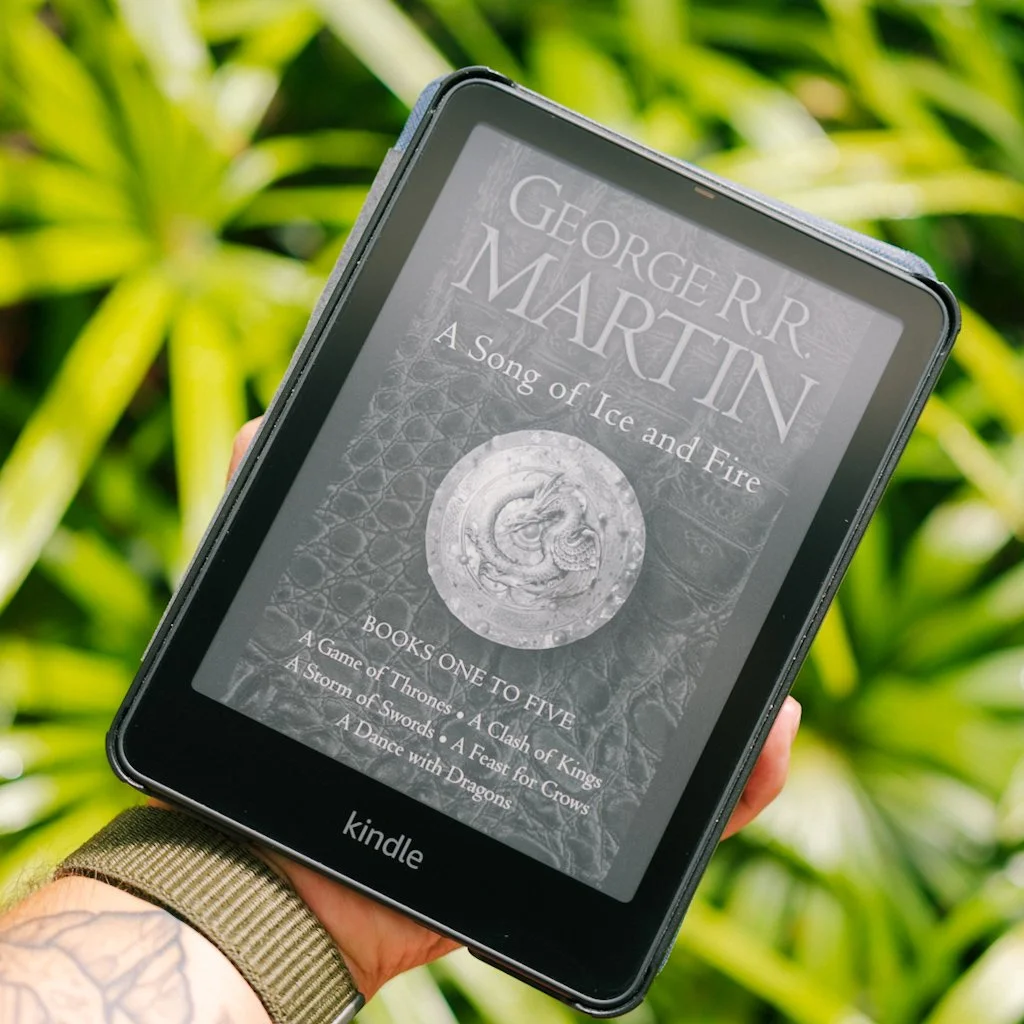
I also travel with a Kindle, because reading is very good for you. That, and I can’t be travelling, taking photos, culling, editing, uploading and writing ALL of the time.
Smart Tags
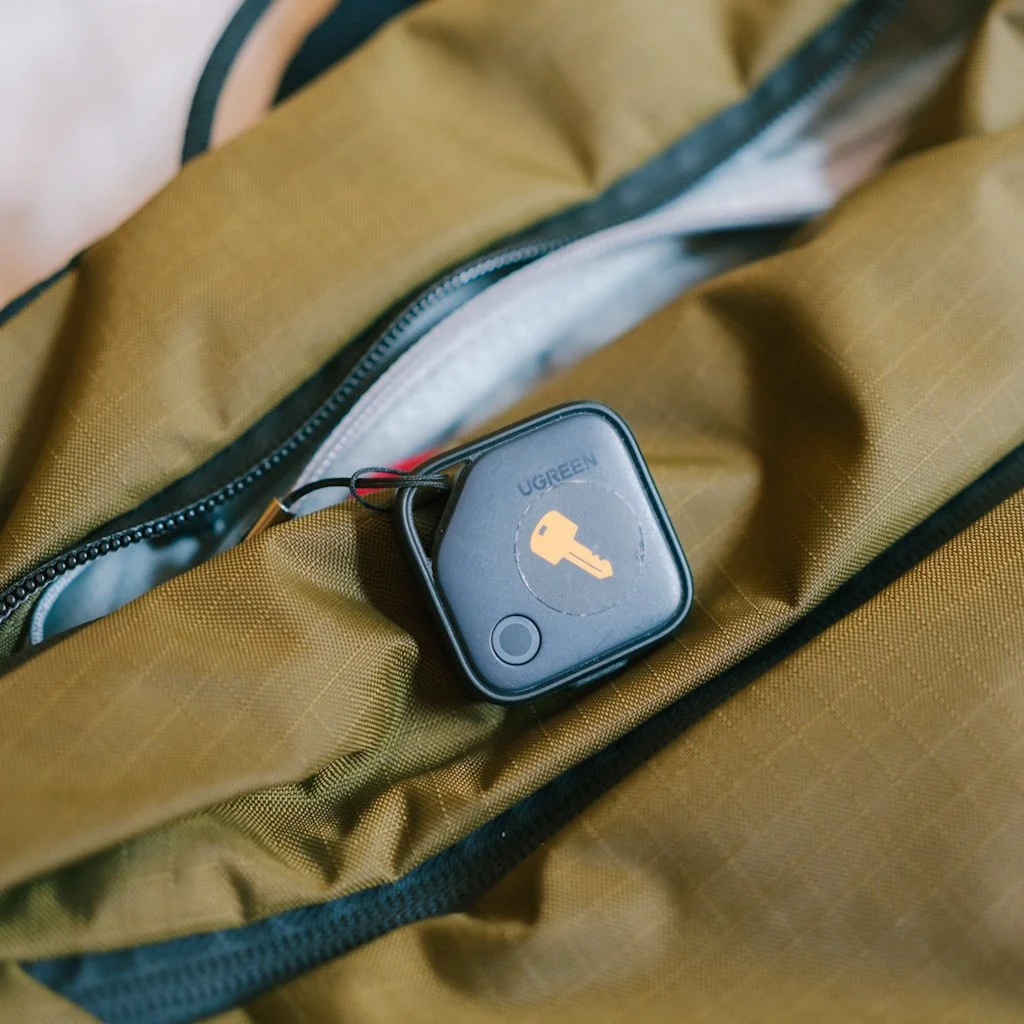
These UGREEN smart tags are equivalent to the Apple AirTags but are a fraction of the cost. These live in each of our bags whilst traveling so we know where they are at all times.
That rounds out My Minimal Travel Photography Kit as it stands in 2026. I have no doubt it’ll continue to change as I carry on travelling and further develop as a photographer.
I’d love to hear how this has helped, what your travel photography loadout consists of, or what lessons you’ve learned from the same process.
Don’t forget to sign up for email updates using the form below - it’s the easiest way to keep up to date with new blog posts, gear changes, travel updates and new products.